
Welcome
I am a final-year PhD student in the Computer Vision and Machine Learning group at the Max Planck Institute for Informatics in the Saarland Informatics Campus, supervised by Prof. Bernt Schiele. I am part of the CS@max planck doctoral program and an associated member of the Research Training Group on Neuroexplicit Models of Language, Vision, and Action.
My research aims to make multimodal foundation models trustworthy and safe. I am interested in understanding the inner workings and mechanisms of these models, and in making this understanding actionable.
Towards this, my PhD has focused on efficiently scaling interpretability and using it to improve models. We found that popular explanation methods can fail to faithfully reflect how models arrive at their outputs, which motivated the need for inherently interpretable models that show where they look and what they see by design. We showed that vision and vision-language foundation models can be converted, at a fraction of their training cost, into such models that remain close to the originals in performance. We also showed that feedback on explanations, from humans or teacher models, can make models more reliable.
I am looking for postdoctoral positions, ideally starting in early 2027. Please feel free to get in touch!
I received my B.Tech. in Computer Science and Engineering with the President of India Gold Medal from the Indian Institute of Technology Hyderabad in 2019. In the past, I have worked on adversarial robustness, crowd-sourced vote aggregation with Prof. Vineeth N Balasubramanian, and incomplete MaxSAT solvers with Prof. Saurabh Joshi and Prof. Ruben Martins. I have also interned at The University of Tokyo with Prof. Tatsuya Harada on visual relationship detection, at Bosch on classification of fundus images, and at Amazon on building a scalable, automated pipeline to identify and fix defects in product catalog images.
News
- 11/2026: Serving as an Area Chair for CVPR 2027.
- 08/2026: One paper accepted at EMNLP Findings 2026.
- 06/2026: Gave a talk at Google in Munich, Germany.
- 06/2026: Co-organized the Saarbrücken Symposium on Interpretable, Trustworthy, and Accountable Artificial Intelligence.
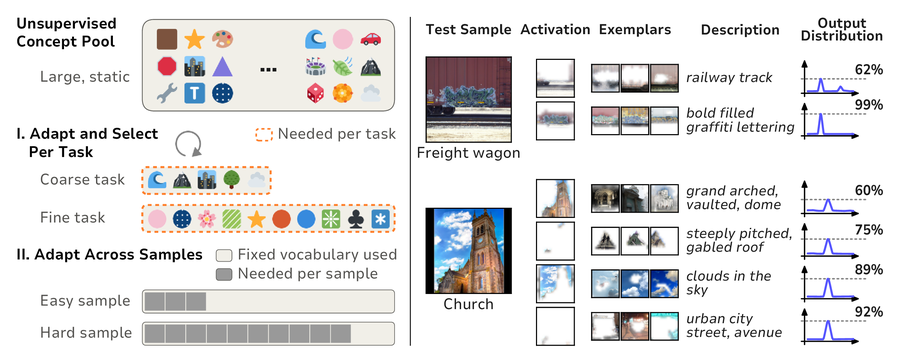
- 06/2026: Our paper on building a language-aligned visual concept foundation model is accepted as a spotlight (top 1.6% of submissions) at ECCV 2026!
- 06/2026: Gave talks at Stanford University, UC Berkeley, UC San Diego, Northeastern University, Boston University, MIT CSAIL, and University of Washington.
- 05/2026: Gave a talk at the Multimodal AI Lab at TU Darmstadt, Germany.
- 05/2026: Selected as an Outstanding Reviewer for CVPR 2026.
- 05/2026: Our paper on building inherently interpretable vision foundation models is accepted at CVPR 2026!
- 05/2026: Gave a talk at the Tübingen AI Center, Germany.
- 04/2026: Co-organizing the 3rd Explainable Computer Vision: Challenges and Opportunities in the Era of Foundation Models (eXCV) Workshop at ECCV 2026.
- 01/2026: New preprint that builds a language-aligned visual concept foundation model.
- 12/2025: One paper accepted at TMLR.
- 10/2025: Invited talk at Guide Labs, USA.
- 09/2025: One paper accepted at NeurIPS 2025.
- 07/2025: Invited talk at IIIT Summer School on AI, India.
- 06/2025: Started working as an Applied Scientist Intern at Amazon.
- 04/2025: Co-organizing the 2nd Explainable Computer Vision: Quo Vadis? (eXCV) Workshop at ICCV 2025.
- 02/2025: New preprint on transforming language models to be explainable.
- 01/2025: Co-organizing the 4th Explainable AI for Computer Vision (XAI4CV) Workshop at CVPR 2025.
- 11/2024: Invited talk at the Symposium on Explainable Artificial Intelligence Beyond Simple Attributions, Mainz, Germany.
- 10/2024: One paper accepted at NeurIPS 2024.
- 07/2024: Two papers accepted at ECCV 2024!
- 07/2024: Co-organizing the 1st Explainable Computer Vision: Where are We and Where are We Going? (eXCV) Workshop at ECCV 2024.
- 06/2024: Co-organizing the 3rd Explainable AI for Computer Vision (XAI4CV) Workshop at CVPR 2024.
- 12/2023: One paper accepted at IEEE TPAMI.
- 11/2023: Selected as a Top Reviewer for NeurIPS 2023.
- 10/2023: Served as a Student Volunteer at ICCV 2023.
- 07/2023: One paper accepted at ICCV 2023.
- 07/2023: Joined the RTG Neuroexplicit Models of Language, Vision, and Action as an associated member.
- 05/2023: Selected as an Outstanding Reviewer for CVPR 2023.
Publications
2026
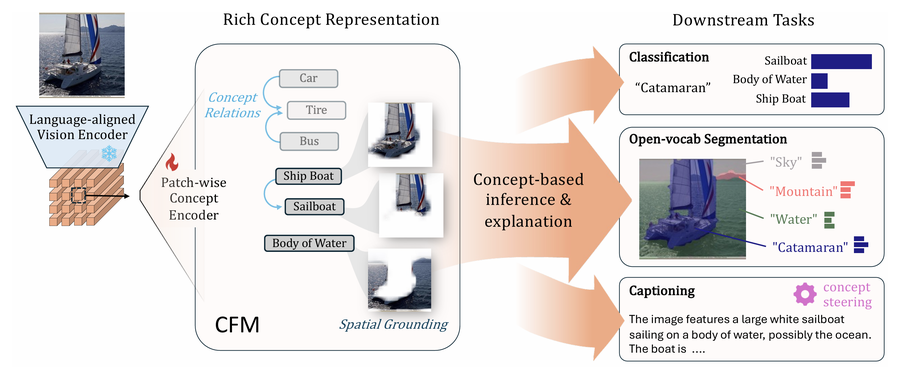
CFM: Language-aligned Concept Foundation Model for Vision
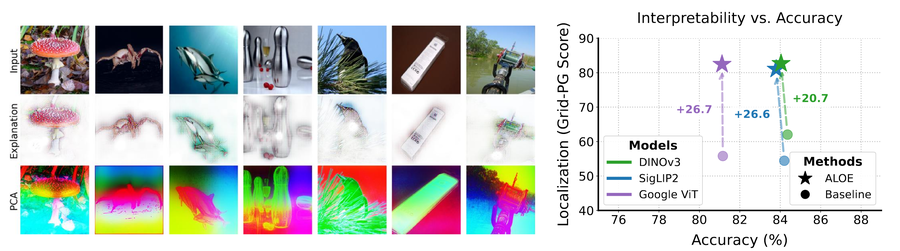
Align Once to Explain: Feature Alignment for Scalable B-cosification of Foundational Vision Transformers
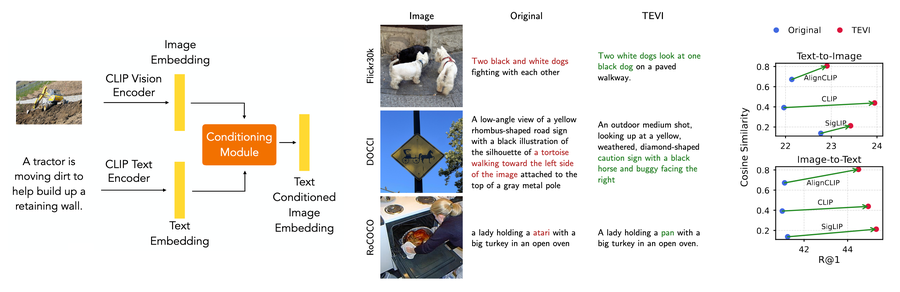
TEVI: Text-Conditioned Editing of Visual Representations via Sparse Autoencoders for Improved Vision-Language Alignment
2025
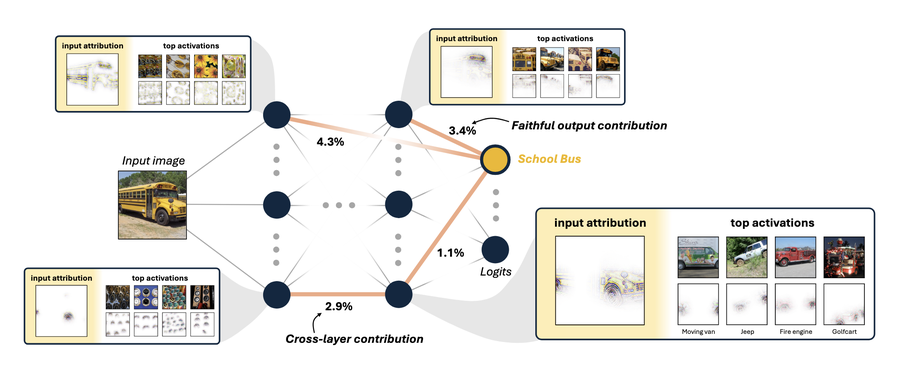
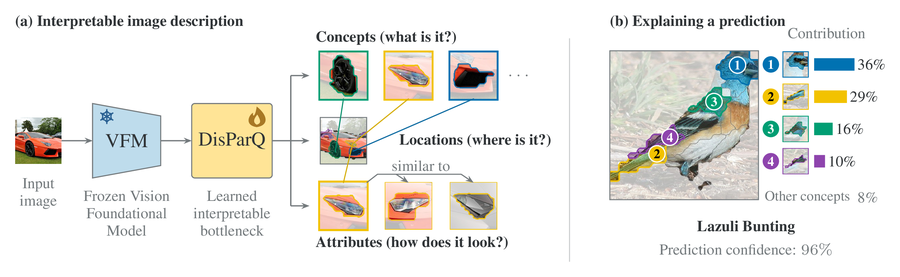
FaCT: Faithful Concept Traces for Explaining Neural Network Decisions
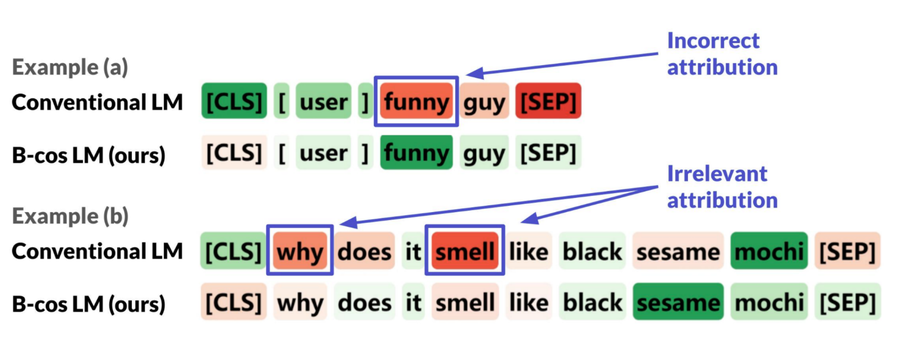
B-cos LM: Efficiently Transforming Pre-trained Language Models for Improved Explainability
2024
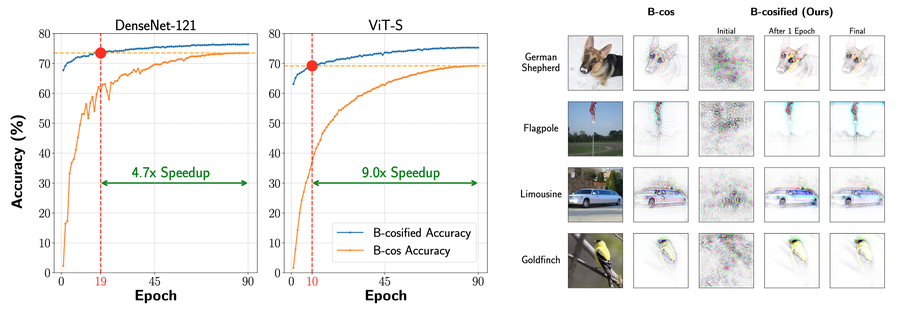
B-cosification: Transforming Deep Neural Networks to be Inherently Interpretable
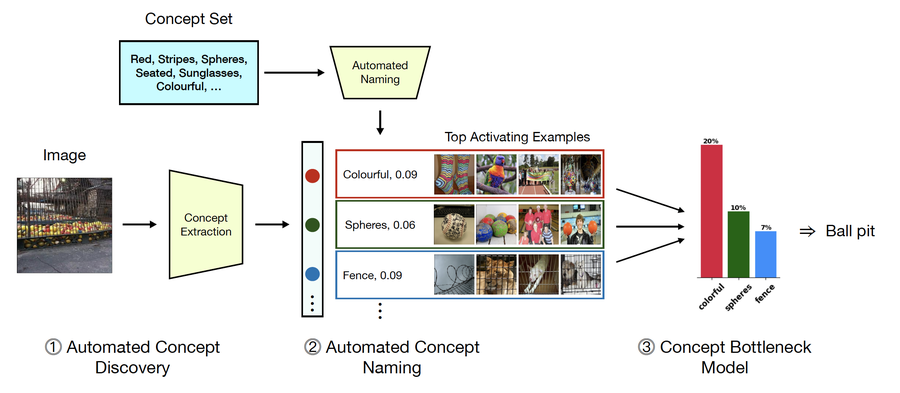
Discover-then-Name: Task-Agnostic Concept Bottlenecks via Automated Concept Discovery
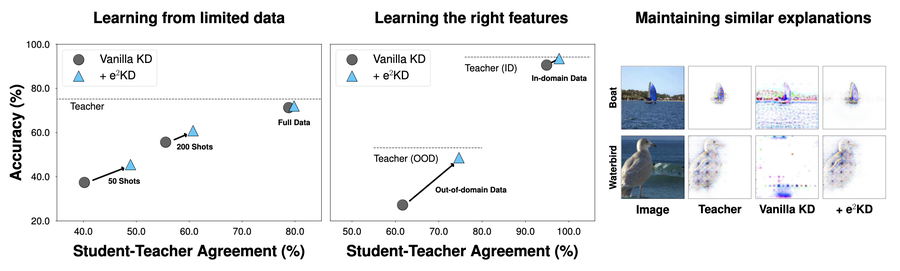
Good Teachers Explain: Explanation-Enhanced Knowledge Distillation
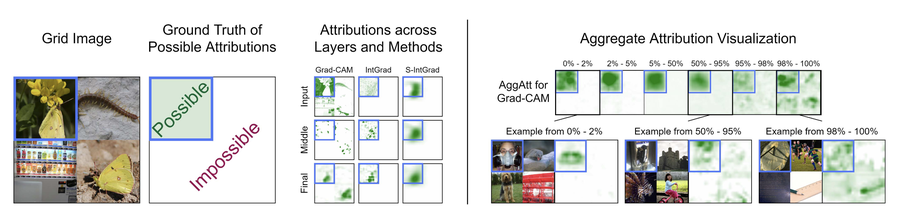
Better Understanding Differences in Attribution Methods via Systematic Evaluations
2023
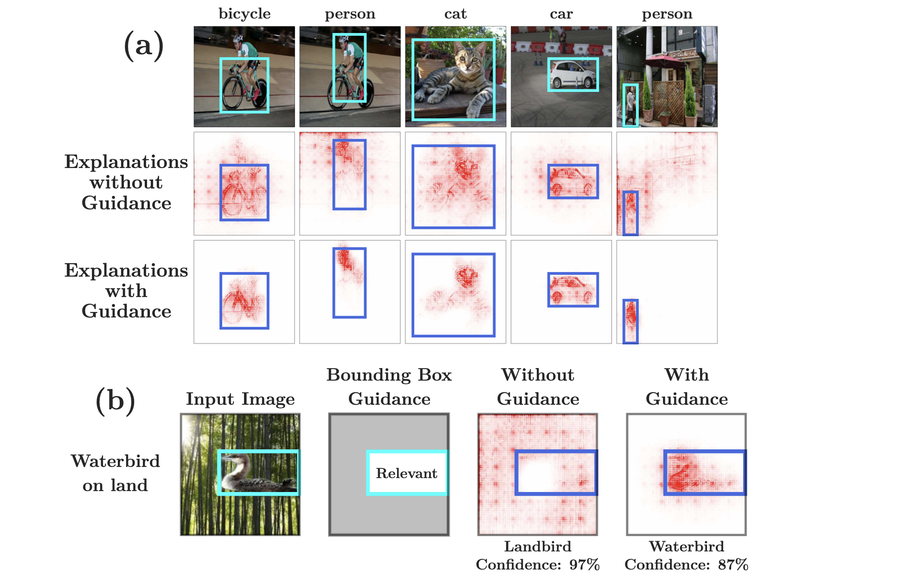
Studying How to Efficiently and Effectively Guide Models with Explanations
2022
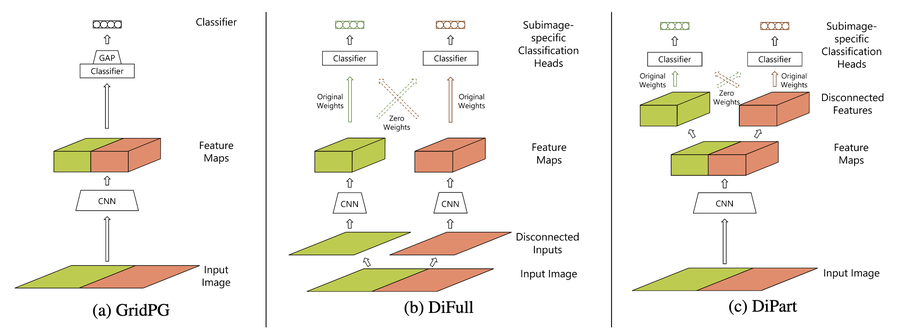
Towards Better Understanding Attribution Methods
2020
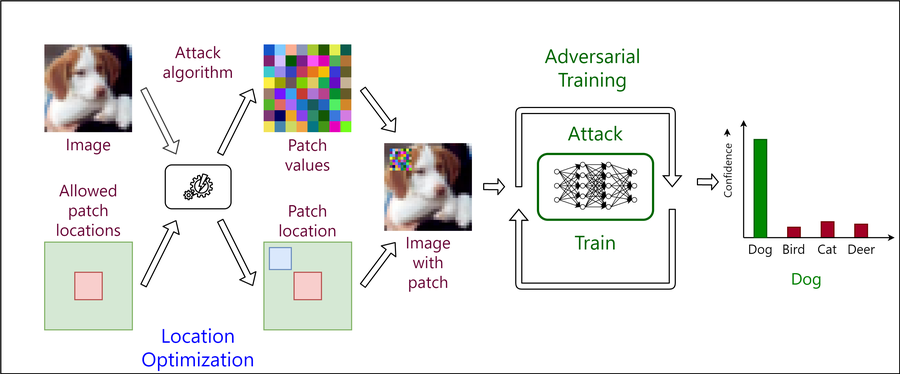
Adversarial Training against Location-Optimized Adversarial Patches
2019
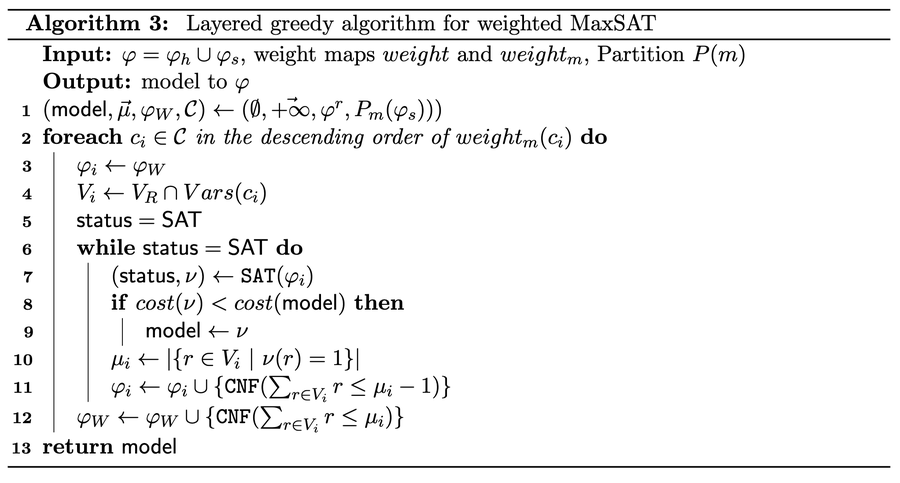
Open-WBO-Inc: Approximation Strategies for Incomplete Weighted MaxSAT
2018
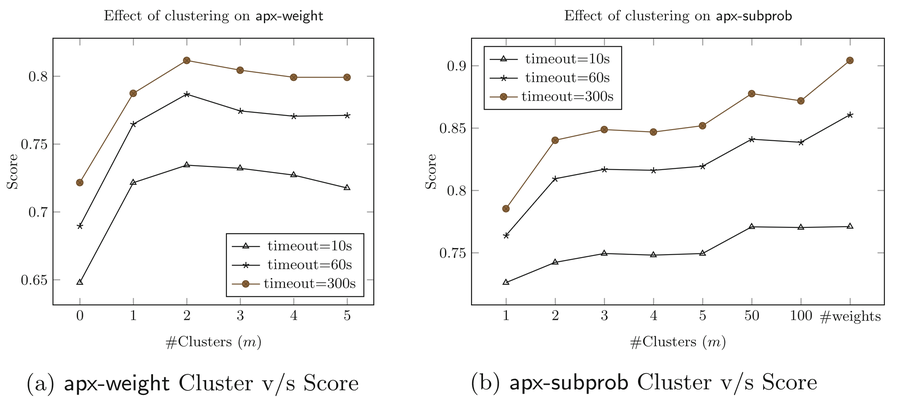
Approximation Strategies for Incomplete MaxSAT
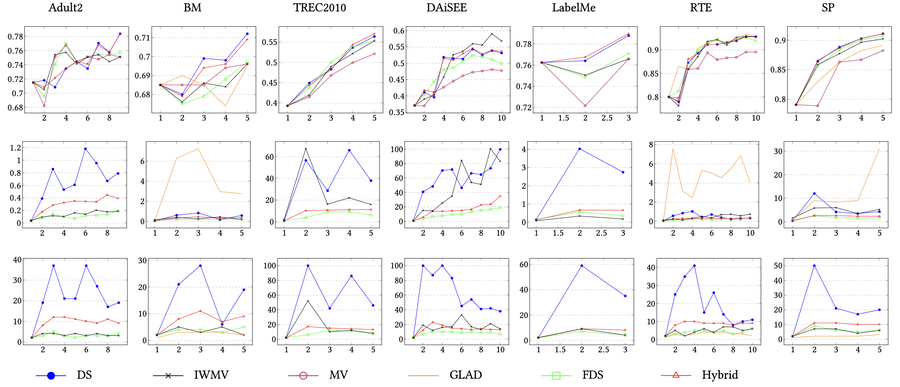
Fast Dawid-Skene: A Fast Vote Aggregation Scheme for Sentiment Classification
Teaching and Supervision
All students below were formally supervised by Prof. Bernt Schiele, unless noted otherwise.
Master Thesis
- Nov 2026 – Present
-
Aug 2025 – Mar 2026
Towards Inherent Interpretability of Foundation Vision Models
-
Mar 2025 – Dec 2025
Family-CBM - Automatic Discovery of Hierarchies in Concept Bottleneck Models
-
Dec 2023 – Jun 2024
Increasing Interpretability of Deep Neural Networks via B-cosification
-
Dec 2023 – Jun 2024
A Good Teacher Explains: Explanation-enhanced Knowledge Distillation
Bachelor Thesis
-
Jul 2025 – Oct 2025
Refining Concept Bottlenecks with Symbolic Relations
Research Immersion / Student Research
-
Mar 2026 – Present
Benchmarking Reasoning of Multimodal Models
-
Nov 2023 – Feb 2024
Class Concept Discovery with B-cos Networks
Graduate Teaching Assistantships (Saarland University)
-
Explainable Machine Learning Seminar, Winter 2026–27
-
Explainable Machine Learning Seminar, Winter 2025–26
-
High-Level Computer Vision, Summer 2024
-
High-Level Computer Vision, Summer 2023
Undergraduate Teaching Assistantships (IIT Hyderabad)
-
CS6510: Applied Machine Learning, Spring 2019
-
CS6230: Optimization Methods in Machine Learning, Fall 2018
-
CS3423: Compilers-II, Fall 2018
-
CS2433: Principles of Programming Languages-II, Spring 2018
-
CS2400: Principles of Programming Languages-I, Fall 2017
Academic Activities
Area Chair
- CVPR 2027
Organizer
- Saarbrücken Symposium on Interpretable, Trustworthy, and Accountable Artificial Intelligence 2026, Saarbrücken, Germany
- 4th Explainable AI for Computer Vision (XAI4CV) Workshop CVPR 2025, Nashville, USA
Reviewer
Conferences
- CVPR 2023–2026 (2x Outstanding Reviewer)
- NeurIPS 2023, 2025–2026 (1x Top Reviewer)
- ECCV 2024–2026
- ICML 2024–2026
- ICLR 2024, 2027
- ICCV 2023–2025
Journals
- IEEE TPAMI 2024
Workshops
- NeurIPS XAIA 2023
Miscellaneous
- Student Volunteer, ICCV 2023
Talks
Awards
Academic Awards
- Outstanding Reviewer (∼5%) at CVPR 2026.
- Top Reviewer (∼10%) at NeurIPS 2023.
- Outstanding Reviewer (∼3.3%) at CVPR 2023.
- President of India Gold Medal 2019 from IIT Hyderabad.
- Institute Silver Medal 2019 from IIT Hyderabad.
- Appreciation in Research Award 2019 from IIT Hyderabad.
- Honda Young Engineer and Scientist Award 2018 from Honda Foundation, Japan.
- Academic Excellence Award 2018 from IIT Hyderabad.
- Academic Excellence Award 2016 from IIT Hyderabad.
- National Talent Search Scheme (NTS) Scholarship 2013 from National Council of Educational Research and Training, India.
Team Competitions
- Open-WBO-Inc-complete secured the 3rd position in the 60 seconds category in the incomplete weighted MaxSAT track at the MaxSAT Evaluation 2020.
- Open-WBO-Inc-BMO-satlike secured the 3rd position in the 60 seconds category and the 300 seconds category in the incomplete weighted MaxSAT track at the MaxSAT Evaluation 2019.
- Open-WBO-Inc-BMO secured the 1st position in the 60 seconds category and 2nd position in the 300 seconds category in the incomplete weighted MaxSAT track at the MaxSAT Evaluation 2018. Open-WBO-Inc-Cluster secured the 4th position in both these categories.
- The MIL team secured the 6th position out of 232 teams in the Visual Relationship Detection track of the Google AI Open Images Challenge. A poster on the method was presented at the Open Images Challenge Workshop at ECCV 2018.